
Race Star - Team Manager Game
Gryphon GamesRacing
4.0137.00 Reviews
- Version
- 1.5.1
- Installs
- 500.00K
- Age Rating
- Everyone
Screenshots
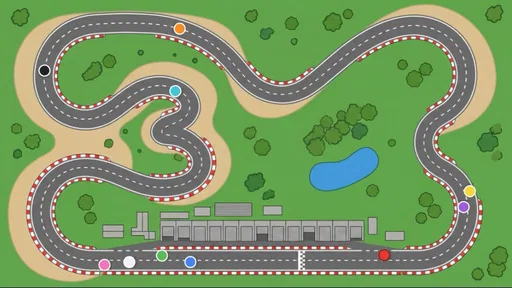

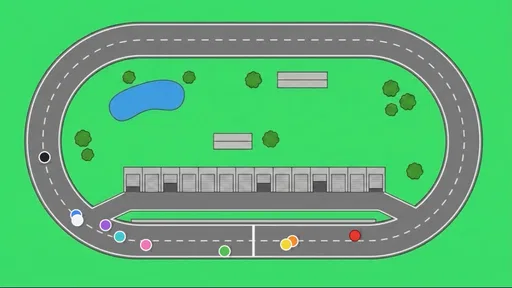
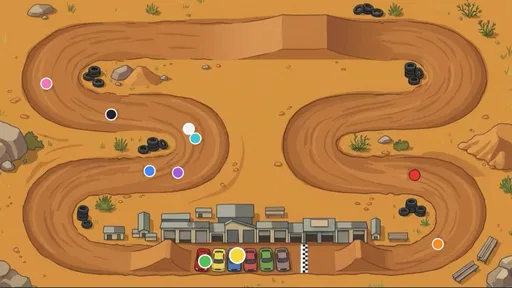
Our Review of Race Star - Team Manager Game
 Analysis by Appyee
Race Star is the kind of racing game I open when I want the feeling of running a team without committing to a long, hands-on driving session. It comes from Gryphon Games and takes a management-first approach: I build a racing operation, sign drivers, improve cars, and work toward championships while the game handles the moment-to-moment racing in an idle-friendly format.
That distinction matters. This is not trying to replace a traditional touch-racing game where I steer through every corner, nor is it a full simulation built around detailed telemetry. Its appeal is the steady decision loop between races. I make a change, watch the team perform, collect progress, and decide what deserves attention next. When that loop is working, it creates a pleasant sense of momentum that fits short phone sessions.
The game is free to download and is suitable for Everyone, which makes it easy to recommend as a casual option for a broad audience. It also includes optional purchases ranging from $0.99 to $99.99 per item, so I would approach the economy with the usual care. The free starting point is inviting, but anyone who dislikes upgrade systems or spending prompts should keep that part of the experience in mind before settling in.
My first impression: a racing game built around the team, not the steering wheel
The strongest early impression is how quickly the game communicates its role. I am not being asked to master a complicated control scheme before I can enjoy the racing theme. Instead, the focus moves toward the people and machines behind the result. Signing drivers, tuning cars, and choosing where to invest gives the game a clear identity from the beginning.
That makes it approachable, but it also sets a limit. Players looking for direct speed, dramatic overtakes controlled by their own thumbs, or the physical sensation of taking a corner will find a different experience here. The satisfaction comes from preparation and progression rather than reflexes. I found it closer to supervising a compact racing organization than playing a conventional arcade racer.
The presentation supports that idea with a readable, game-like style rather than trying to imitate a serious broadcast. The overall mood feels designed to keep the action understandable on a small screen. I can see why a developer would choose this direction for an idle management game: the visual language needs to make improvement feel visible without burying the player under technical detail.
One useful habit is to treat the first sessions as an information-gathering phase instead of immediately chasing every available improvement. I get more value from noticing how a driver change affects the team, how a car upgrade changes my expectations, and how quickly resources return after a race. That approach makes later decisions feel deliberate instead of turning the game into a sequence of automatic taps.
A compact racing world with a clear visual language
The setting is not presented as a sprawling motorsport simulation with a deeply documented universe. Its world is more functional: a colorful framework for a growing team, a roster of drivers, upgraded cars, and championship goals. I think that restraint works. The game does not need a long fictional history to explain why I care about the next event; the team-building context supplies enough motivation.
Art direction is especially important in a management game because much of the excitement comes from recognizing progress. If every screen looked equally busy or every upgrade felt abstract, the career loop would lose its emotional reward. Here, the racing theme gives ordinary management choices a stronger flavor. Improving a car feels more meaningful than simply increasing a number because it belongs to a recognizable racing fantasy.
There is also a practical benefit to this visual approach. The game can remain readable during short checks, which is important for an idle title. I do not want to study a crowded interface just to understand whether my team is ready for the next challenge. When a game is meant to be revisited throughout the day, clarity becomes part of its atmosphere.
My advice is to play with the sound on at least during the first few sessions, even if I eventually lower it. Visual cues explain the structure, but audio helps the races feel like events rather than background calculations. Together, the two layers make the team’s progress easier to feel.
Why the setting works better for short sessions than long marathons
The racing-team setting naturally supports a stop-and-check routine. I can make a decision before leaving the game, return later, and see whether the team has moved forward. That makes it a good match for a commute, a break between tasks, or a few minutes before bed. It does not demand the uninterrupted concentration of a competitive racing game.
A realistic everyday use case would be checking the team during a lunch break. I might review the current driver lineup, spend a resource on a car improvement, start the next event, and close the app. The session can feel complete even though I have not played for a long stretch. That sense of a small finished task is one of the game’s most useful qualities.
The trade-off is that the same pacing may feel thin if I want constant interaction. Once the immediate decisions are made, the game’s idle structure asks me to wait for progress rather than create every result manually. Players who enjoy watching a plan unfold will appreciate that rhythm. Players who need frequent control may prefer an arcade racer or a more detailed management simulation.
Sound, rhythm, and the feeling of a race day
Sound has a quiet but important job here. In a game centered on repeated races and upgrades, audio helps separate preparation from payoff. The management screens establish a calmer rhythm, while the race moments provide the sense that a decision has been tested. Even when the mechanics remain simple, that contrast gives the loop a beginning, middle, and end.
I would not describe the audio as the main reason to play. The core attraction remains the progression system and the racing theme. Still, sound contributes to the atmosphere by making the team feel active rather than frozen between decisions. That matters in an idle game, where the player can otherwise feel as if they are only maintaining menus.
The pacing works best when I resist the urge to rush every result. If I treat each event as a small checkpoint, the game creates a pleasant cadence: prepare, race, inspect, improve, and prepare again. That cadence is more satisfying than repeatedly opening the game only to claim something without thinking about the next step.
There is a strategic lesson hidden in that rhythm. I should avoid spending every resource the moment it becomes available. Keeping a small reserve gives me room to respond when a driver decision or car improvement seems more valuable than a routine purchase. In an idle game, patience is not passive; it is one of the few ways to make the limited decisions feel meaningful.
How the mechanics fit the art and atmosphere
The mechanics and presentation support each other because both are built around the fantasy of gradual team growth. The game asks me to think like an owner or manager rather than a driver. Recruiting talent, developing machinery, and aiming for championships all reinforce the same idea: success is assembled over time.
That cohesion is the game’s biggest strength. I do not feel that the racing theme has merely been placed on top of an unrelated upgrade system. The choices have a natural connection to the setting. When I improve the team, I am not just making a generic meter rise; I am trying to build a stronger racing operation.
At the same time, the simple structure means I should not expect the depth of a dedicated motorsport management title. There is a difference between making meaningful high-level choices and managing every layer of a real racing organization. This game favors accessibility and momentum. That is a smart fit for mobile play, but it also means experienced simulation fans may want more detail than the design intends to provide.
The driver system is particularly important to how personal the career feels. Even without turning the game into a spreadsheet, choosing who represents the team gives the progression a human element. My recommendation is to judge drivers as part of a broader plan rather than automatically selecting the newest or most attractive option. A strong individual choice may not be the best use of resources if the car still needs attention.
Car tuning creates a similar trade-off. It is tempting to treat every upgrade as equally valuable, but a better approach is to connect spending to the next realistic goal. If the team is already competitive in its current stage, saving for a larger improvement may be wiser than making several minor changes. That kind of decision gives the idle format more texture than simply tapping every highlighted button.
Where the free model affects the experience
The free entry point is a genuine advantage because it lets me test the game’s management loop before making a commitment. I can find out whether I enjoy its pace, its visual tone, and its level of interaction without paying upfront. For a casual racing game, that lowers the barrier to trying something new.
Optional purchases are part of the experience, and the available items can cost from $0.99 to $99.99. I would recommend deciding on a personal spending boundary before the progression becomes familiar. The most useful question is not whether a purchase exists, but whether it improves my enjoyment or merely shortens a wait that is part of the intended rhythm.
For players who prefer a completely predictable cost, a paid racing game without an upgrade economy may be a better fit. On the other hand, people who like checking in regularly and choosing when to accelerate progress may find the free model more flexible. The important point is to see the purchase system as a design trade-off, not as a reason to assume the game is automatically good or bad.
Who will enjoy it, and who should choose another racer?
I think this is a good match for someone who enjoys racing as a theme but does not always want to drive. It suits players who like collecting progress, making occasional management choices, and watching a team become more capable. It is also friendly to shorter sessions, which gives it an advantage over racers that require a full event before the player feels finished.
It is less suitable for someone who wants precise control over braking, steering, overtaking, or track position. Those players should look toward a hands-on arcade racer or a driving simulation. Likewise, anyone seeking a deep motorsport sandbox with extensive staff management, detailed race strategy, and complex technical analysis may find this game intentionally lightweight.
The game is also not ideal for players who dislike waiting-based progression. Its identity depends on returning to the team, making a decision, and allowing the broader loop to continue. If that sounds satisfying, the pacing can feel relaxing. If it sounds like an obstacle between you and the action, a conventional race-by-race game will probably offer more immediate fun.
What the current release says about its place on mobile
Race Star is currently at version 1.4.1 and requires iOS or Android 12 or later. That makes the operating-system requirement worth checking before downloading, especially on an older phone or tablet. The game is aimed at a broad audience, but compatibility still determines whether that accessible design is useful on a particular device.
The title has reached over 100 thousand installs, with an average rating of 3.9 from around 1.9 thousand ratings and 92 written reviews. I read that overall response as a sign of a game with a recognizable appeal but also some room for personal preference. The idle-management format will naturally divide players: some will enjoy the relaxed progression, while others will want more direct racing control.
That rating context also reinforces my advice to judge the game by its intended rhythm. It should not be evaluated as though it were competing directly with a steering-focused racer. Its success depends on whether the combination of team building, car improvement, driver choices, and championship goals creates enough satisfaction between active moments.
My atmosphere verdict after looking beyond the races
What I like most is the consistency between the game’s mood and its mechanics. The visual direction presents racing as a bright, approachable team project, the sound gives the events a sense of occasion, and the pacing encourages regular visits instead of long, demanding sessions. None of those elements tries to overpower the others.
The experience is strongest when I play it as a compact management story. I am building a team, making measured investments, and waiting to see whether the next race confirms my choices. That framing makes the idle structure feel purposeful rather than merely slow. It also gives the game a calmer personality than many racing alternatives.
Its limitations are equally clear. Direct driving is not the focus, the management depth is designed for accessibility, and the free-to-play economy may not suit everyone. I would also avoid treating every upgrade as urgent; doing so can reduce the decision-making to routine spending and make the atmosphere feel more mechanical than strategic.
For me, the best way to approach it is as a low-pressure racing companion. I can play actively when I want to plan the next move, then leave it alone while the team’s longer progression continues. That makes it especially appealing for players who enjoy the idea of motorsport management but want something lighter than a full simulation.
Race Star is worth trying if your favorite part of racing is building the organization behind the result. Its art direction, sound, and pacing create a coherent mobile mood, while the driver and car systems give the idle format a clear purpose. I would recommend it to patient players who enjoy incremental progress and short check-ins, but I would point hands-on racers toward a more interactive alternative. Within its chosen lane, it offers a pleasant and focused way to turn racing ambition into a team-building routine.
Verdict
Strengths of Race Star - Team Manager Game
- Simple controls make races easy to follow and manage.
- Team-building choices add strategy beyond basic racing.
- Short events fit well into quick gaming sessions.
- Progression gives you reasons to upgrade and return.
- Bright visuals make the races easy to read on mobile screens.
Limitations of Race Star - Team Manager Game
- Some upgrades may take considerable time without extra resources.
- Race outcomes can feel influenced by stats more than player skill.
- The management options may feel limited for experienced strategy fans.
- Repeated events can become predictable after extended play.
- An internet connection may be required for some features.
Other Releases by Gryphon Games
View All
Planet Crusher: Mine & Attack
Arcade3.9

Sport Star - Team Manager Game
Sports4.3

Track Star - Team Manager Idle
Sports4.2

Fight Star - Team Manager Idle
Sports4.1
Similar Picks in This Category
View All
Hill Climb Racing
Fingersoft4.3

Dr. Driving
SUD Inc.4.2

Traffic Rider
skgames4.5

Asphalt 8 - Car Racing Game
Gameloft SE4.6

Race Master 3D: Car Racing
Beresnev Games4.6

Extreme Car Driving Simulator
AxesInMotion Racing4.3
Frequently Asked Questions
What is Race Star - Team Manager Game?
Race Star - Team Manager Game is a motorsport management game in which you guide a racing team rather than directly controlling every turn of the car. You are responsible for important decisions such as selecting drivers, improving vehicles, managing resources, and choosing race strategies. The experience is designed for players who enjoy planning, progression, and competition more than traditional arcade driving.
Do I need an internet connection to play Race Star - Team Manager Game?
An internet connection may be required for several important features, including downloading game data, synchronizing progress, participating in online competitions, viewing leaderboards, and accessing limited-time events. Some parts of the game may work offline, but availability can vary by version and device. For the most reliable experience, especially when claiming rewards or competing, playing while connected is recommended.
Is Race Star - Team Manager Game free to download and play?
Race Star - Team Manager Game can generally be downloaded without an upfront purchase, but it may include optional in-app purchases. These purchases can provide extra currency, upgrades, resources, or faster progression. You can normally play without spending money, although advancing through certain stages or competing at higher levels may require more patience and careful resource management.
Can I customize and upgrade my racing team?
Team development is one of the main features of Race Star - Team Manager Game. Depending on the available game systems, you can improve cars, develop performance-related abilities, manage drivers, and make decisions that affect race results. Upgrades should be selected thoughtfully because resources are limited, and focusing on a balanced team may be more effective than improving only one area.
Is Race Star - Team Manager Game suitable for casual players?
The game can be suitable for casual players who enjoy short management sessions and gradual progression. You do not necessarily need advanced racing knowledge to begin, since the early stages introduce the main mechanics step by step. However, players who want to remain competitive may need to check upgrades, rewards, events, and race strategies regularly, particularly when facing stronger opponents or time-limited challenges.
Play our best games!


